African Development Bank Group champions trade corridors for Africa’s Prosperity at Luanda Infrastructure Financing Summit
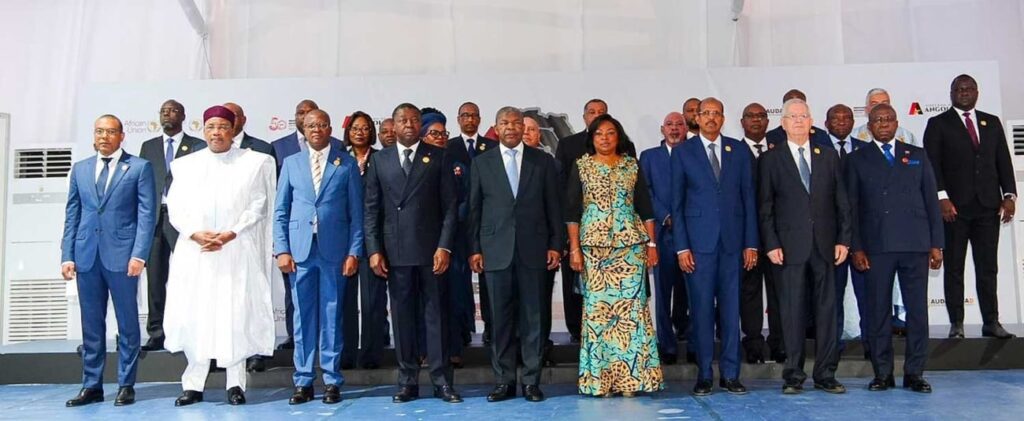
The African Development Bank Group (AfDB) has reaffirmed its unwavering commitment to advancing a connected, industrialised, and inclusive Africa by enabling investments in infrastructure and regional integration, and by supporting more effective policy-making. This pledge was made by Joy Kategekwa, Director of the Bank Group’s Regional Integration Coordination Office, at the third Luanda Financing Summit for Africa’s Infrastructure Development. The summit took place in the Angolan capital from 28 – 31 October 2025, under the theme “Capital, Corridors, Trade: Investing in Infrastructure for the AfCFTA and Shared Prosperity.” It brought together policymakers, development partners, and private sector leaders to explore how infrastructure can unlock Africa’s industrial potential under the African Continental Free Trade Area (AfCFTA). Dignitaries in attendance included H.E. João Lourenço, President of the Republic of Angola; Kamel Abdel Hady Farag Al-Wazir, Minister of Transport of Egypt; Rui Miguêns de Oliveira, Minister of Economy and Planning of Angola; as well as senior representatives of the African Union Development Agency (AUDA-NEPAD). Corridors as Catalysts: The Lobito Corridor Vision At a session on the Lobito Corridor – a commercial route stretching across three countries, connecting landlocked Zambia and the Democratic Republic of Congo (DRC) to Angola’s Atlantic coast – Kategekwa described it as a prime example of the AfCFTA in action. “The Lobito Corridor teaches us new ways to design trade corridors by looking beyond the backbone of transportation and focusing on integrating agriculture, manufacturing, logistics, and services value chains,” she said. She stressed that infrastructure by itself is insufficient; for corridors like Lobito to deliver real transformation, they must be supported by strong governance, inclusive participation, and financing mechanisms that attract private capital. “[Infrastructure] is not self-executing. We must ensure institutional frameworks activate the intended outcomes that people, governance, and finance move together to realize Africa’s industrial dream.” Financing Africa’s Industrial Leap: The PAIDA Agenda At a High-Level Dialogue on Industrial Financing for the Programme for Accelerated Industrialisation Development in Africa (PAIDA), Kategekwa called for the alignment of manufacturing and production systems with regional market opportunities. “As tariffs are removed under the AfCFTA, we must ask ourselves: what regional value chains are we building, and where do African businesses fit in?” she said, adding that sectors such as automobiles, lithium-ion batteries, leather, textiles, soya, and cocoa are ripe for regional cooperation and value addition. The session concluded with renewed commitments to finance Africa’s industrial growth through special economic zones, green industrial facilities, and export facilitation platforms. A new PAIDA Investment Dialogue Platform was launched to track partnerships and progress. Corridors and Integration: Engines of Shared Prosperity Director Kategekwa told the audience at a session on “Regional Corridors and Africa’s Integration Agenda” that the continent’s transformation depends on efficient regional corridors that leverage infrastructure and policy to connect production hubs to markets. She noted that high logistics costs, inefficient border procedures, and unreliable energy continue to hinder competitiveness and exclude small businesses from cross-border trade. “Holistic corridor development offers a solution – one that lowers trade costs, expands value chains, and promotes inclusive, climate-smart growth,” she said. The African Development Bank Group’s approach integrates transport, energy, and digital connectivity with trade facilitation and enterprise support, ensuring that corridors become engines of integration and prosperity. A Strategic Call: Link Capital, Corridors, and Trade Kategekwa’s message in Luanda was clear and emphatic: Africa’s path to transformation must be built on integration, value addition, and inclusivity. “What enters the AfCFTA door must be goods and services made in Africa,” she concluded. “That is how we turn trade corridors into engines of industrialization and deliver shared prosperity for all Africans.” The bank Group delegation to the summit included Pietro Toigo, Country Manager for Angola, and Joel Daniel Muzima, Country Economist for Angola. Mike Salawou, Director, Infrastructure Cities and Urban Development participated virtually. High-level panel on the Lobito Corridor, discussing advancing regional trade and integration, at the 3rd Luanda Finance Summit. Credit: African Development Bank Group www.afdb.org African Development Bank Group champions trade corridors for Africa’s Prosperity at Luanda Infrastructure Financing Summit.
$25B African Megaproject begins – A cross-continental system to move a new form of energy
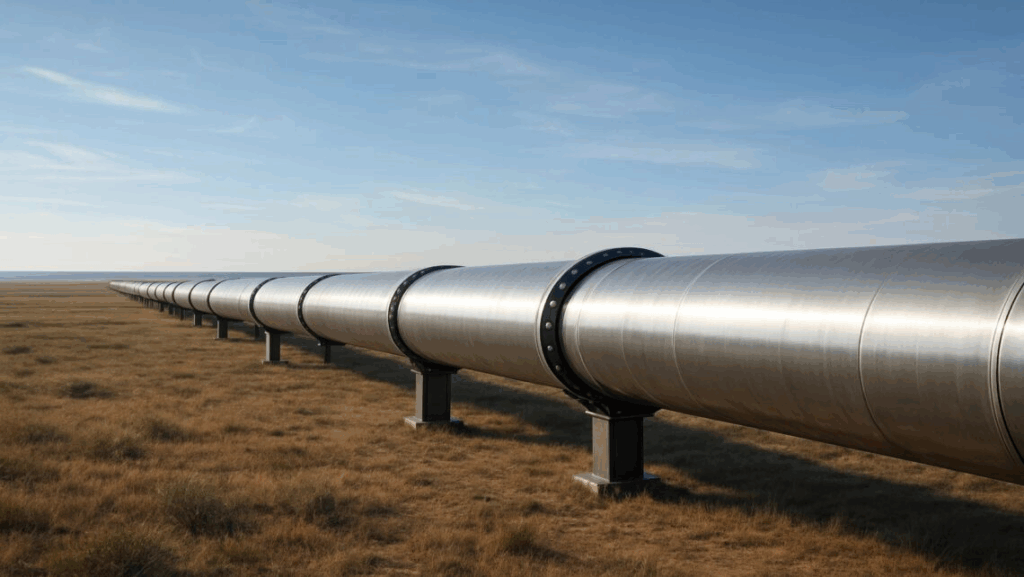
Africa might be in store for a new development in energy that could aid and boost its overall economic potential. A new system that is said to work over continents is entering the planning phase. This system can move energy over large distances and many nations. The world is watching intently as the potential is astronomical. A new form of energy is set to give new life to Africa Large-scale energy flow will be realized with this project and especially for African countries along the Atlantic. A channel way of energy supply is to be created where resources can be transported across borders, with the idea being to supply energy and economic upliftment to areas that have gone without these for years. This energy megaproject could alter things dramatically for the countries involved by providing energy security, which has become a rampant problem in Africa. Funding is being sourced, and this was evident at the recent US-Africa energy forum in Houston, Texas. Leadership from North Africa laid out a plan of transformation as it pertains to energy requirements. How this energy megaproject could work Links between Africa and Europe are at the heart of this energy project. Those involved will need to act decisively before energy trends change and funding becomes more of a strain than it already is. The energy project will involve a gas pipeline between Nigeria and Morocco. The proposed pipeline will be approximately 5,600 to 6,200 kilometers, stretching across 13 African nations along the Atlantic coast. The cost is as jaw-dropping as its potential, with the energy project reported to cost $25 billion. The pipeline itself would transport 30 billion cubic meters of natural gas yearly. It would not only supply the African countries along the Atlantic but also see Morocco become a hub for energy exports to Europe and beyond. The benefits of this energy project and how it might work Backed by the regional bloc Economic Community of West African States (ECOWAS), this energy project is also supported by the Nigerian National Petroleum Company Limited (NNPC) and Morocco’s Office National des Hydrocarbures et des Mines (ONHYM). The proposition is logical as Nigeria has Africa’s largest proven gas reserves, but this has been underused so far. For Morocco, it is the opportunity to be the bridge between Africa and Europe when it comes to energy supply. New supply routes for Nigeria help circumvent geopolitical issues and offer the 13 nations along the Atlantic cleaner energy, in the hopes of getting these nations in line with the global effort to decarbonize. This will come with opportunities for jobs in those 13 nations along this corridor and provide these nations with cleaner energy. The challenges this energy project faces Financing what is to be the longest offshore and overland pipeline ever attempted in Africa will be demanding. That and the differences in regulations in each of the 13 nations involved, while dealing with a myriad of socio-economic issues across kilometers of coastline and hinterland. All these factors are still being very closely looked at before a final investment decision is made. The idea is ambitious, and the vision is slowly moving towards being realized. If things go according to plan, then the Nigeria-Morocco Gas Pipeline could be the fulcrum for Africa’s energy hopes by unifying various states through this energy project and ushering the continent into a future of cleaner energy while also providing economic stimulation in areas that need this. The thinking is exactly what Africa needs so as to catch up to nations that are making advancements every day towards decarbonization and lower emissions. The potential is off the charts, and this will only spark more ideas of this nature across Africa as time progresses. Credit: The Pulse -www.ecoportal.net $25B African megaproject begins — A cross-continental system to move a new form of energy