African Development Bank Group champions trade corridors for Africa’s Prosperity at Luanda Infrastructure Financing Summit
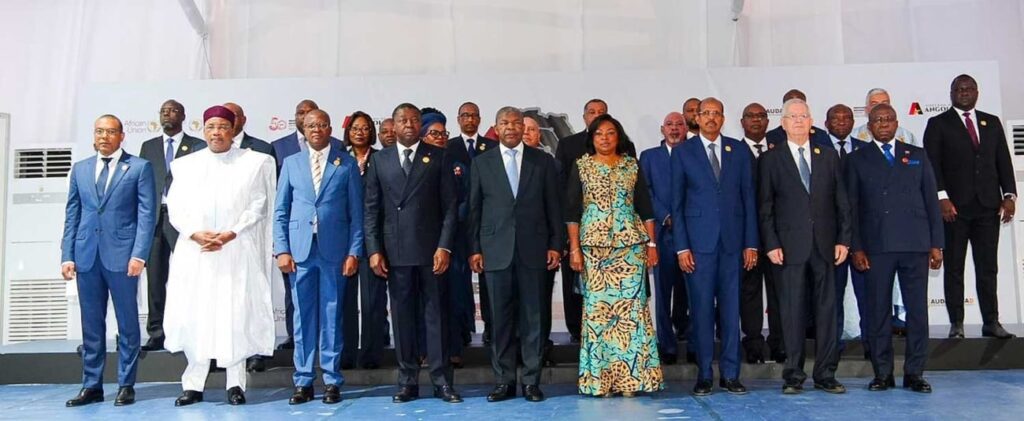
The African Development Bank Group (AfDB) has reaffirmed its unwavering commitment to advancing a connected, industrialised, and inclusive Africa by enabling investments in infrastructure and regional integration, and by supporting more effective policy-making. This pledge was made by Joy Kategekwa, Director of the Bank Group’s Regional Integration Coordination Office, at the third Luanda Financing Summit for Africa’s Infrastructure Development. The summit took place in the Angolan capital from 28 – 31 October 2025, under the theme “Capital, Corridors, Trade: Investing in Infrastructure for the AfCFTA and Shared Prosperity.” It brought together policymakers, development partners, and private sector leaders to explore how infrastructure can unlock Africa’s industrial potential under the African Continental Free Trade Area (AfCFTA). Dignitaries in attendance included H.E. João Lourenço, President of the Republic of Angola; Kamel Abdel Hady Farag Al-Wazir, Minister of Transport of Egypt; Rui Miguêns de Oliveira, Minister of Economy and Planning of Angola; as well as senior representatives of the African Union Development Agency (AUDA-NEPAD). Corridors as Catalysts: The Lobito Corridor Vision At a session on the Lobito Corridor – a commercial route stretching across three countries, connecting landlocked Zambia and the Democratic Republic of Congo (DRC) to Angola’s Atlantic coast – Kategekwa described it as a prime example of the AfCFTA in action. “The Lobito Corridor teaches us new ways to design trade corridors by looking beyond the backbone of transportation and focusing on integrating agriculture, manufacturing, logistics, and services value chains,” she said. She stressed that infrastructure by itself is insufficient; for corridors like Lobito to deliver real transformation, they must be supported by strong governance, inclusive participation, and financing mechanisms that attract private capital. “[Infrastructure] is not self-executing. We must ensure institutional frameworks activate the intended outcomes that people, governance, and finance move together to realize Africa’s industrial dream.” Financing Africa’s Industrial Leap: The PAIDA Agenda At a High-Level Dialogue on Industrial Financing for the Programme for Accelerated Industrialisation Development in Africa (PAIDA), Kategekwa called for the alignment of manufacturing and production systems with regional market opportunities. “As tariffs are removed under the AfCFTA, we must ask ourselves: what regional value chains are we building, and where do African businesses fit in?” she said, adding that sectors such as automobiles, lithium-ion batteries, leather, textiles, soya, and cocoa are ripe for regional cooperation and value addition. The session concluded with renewed commitments to finance Africa’s industrial growth through special economic zones, green industrial facilities, and export facilitation platforms. A new PAIDA Investment Dialogue Platform was launched to track partnerships and progress. Corridors and Integration: Engines of Shared Prosperity Director Kategekwa told the audience at a session on “Regional Corridors and Africa’s Integration Agenda” that the continent’s transformation depends on efficient regional corridors that leverage infrastructure and policy to connect production hubs to markets. She noted that high logistics costs, inefficient border procedures, and unreliable energy continue to hinder competitiveness and exclude small businesses from cross-border trade. “Holistic corridor development offers a solution – one that lowers trade costs, expands value chains, and promotes inclusive, climate-smart growth,” she said. The African Development Bank Group’s approach integrates transport, energy, and digital connectivity with trade facilitation and enterprise support, ensuring that corridors become engines of integration and prosperity. A Strategic Call: Link Capital, Corridors, and Trade Kategekwa’s message in Luanda was clear and emphatic: Africa’s path to transformation must be built on integration, value addition, and inclusivity. “What enters the AfCFTA door must be goods and services made in Africa,” she concluded. “That is how we turn trade corridors into engines of industrialization and deliver shared prosperity for all Africans.” The bank Group delegation to the summit included Pietro Toigo, Country Manager for Angola, and Joel Daniel Muzima, Country Economist for Angola. Mike Salawou, Director, Infrastructure Cities and Urban Development participated virtually. High-level panel on the Lobito Corridor, discussing advancing regional trade and integration, at the 3rd Luanda Finance Summit. Credit: African Development Bank Group www.afdb.org African Development Bank Group champions trade corridors for Africa’s Prosperity at Luanda Infrastructure Financing Summit.
Investing in Africa: Opportunities in Stocks, ETFs, and Real Estate
By Prableen Bajpai Updated October 30, 2025 Reviewed by Andy Smith Fact checked by Vikki Velasquez Africa is rapidly becoming a major destination for emerging markets investors. The World Economic Forum has identified more than half of the world’s fastest-growing economies as located in Africa since 2020.1 Here we look at Africa’s economic development since 2000 and its future prospects and key investment vehicles: stocks, ETFs, mutual funds, ADRs, and real estate. There are nonetheless some risks and a need for due diligence when investing in the region. Key Takeaways Unlocking Africa’s Natural Wealth The African continent is incredibly rich in natural resources. It has huge, untapped reserves of natural gas and oil (about 20% of the world’s reserves) and largely unexploited hydroelectric power. It is home to vast gold, platinum, uranium, cobalt, and diamond reserves.2 More than 60% of the world’s arable land is in Africa, but according to a 2019 report by McKinsey, the continent’s agriculture is only living up to a fraction of its potential.34 Africa also has the advantage of a large and relatively cheap labor force. The continent is undergoing a demographic transformation, with youth as its theme; there is a very high proportion of Africans in their 20s and 30s with fewer dependents—both old and young—that will play out over the next decade.5 There is stability in terms of governance, and many countries that witnessed terrible periods of unrest have emerged as success stories. There are better policies in place, trade has improved and so has the business environment. Africa’s Economic Growth Trajectory According to the World Economic Forum, by 2030, over 40% of Africans will belong to the middle or upper classes, and there will be a higher demand for goods and services. By that time, household consumption is expected to reach $2.5 trillion, more than double that of 2015 at $1.1 trillion. Much of that $2.5 trillion will be spent in three countries: Nigeria (20%), Egypt (17%), and South Africa (11%). But Algeria, Angola, Ethiopia, Ghana, Kenya, Morocco, Sudan, and Tunisia will attract companies seeking to enter new markets. The sectors expected to grow the most by 2030 are food and beverages, education and transportation, housing, consumer goods, hospitality and recreation, healthcare, financial services, and telecommunications. How African Stocks Reflect Economic Trends Sub-Saharan Africa has 26 stock exchanges representing 22 countries.7 These exchanges have a lot of disparity in terms of their size and trading volume. The continent has a handful of prominent exchanges and many small exchanges that are characterized by small trading volumes and few listed stocks. Efforts are being put in place by all countries to boost their exchanges by improving investor education and confidence, improving access to funds, and making the procedures more transparent and standardized. Exploring Investment Options in Africa African stock markets come in different varieties, and they require deep understanding to select the appropriate stock exchange. Due diligence is key. Investing through a mutual fund or exchange traded fund (ETF) is often a better bet for small investors looking for exposure to the economies of Sub-Saharan Africa. Such funds track a large basket of companies doing business in the region, rather than relying on any single stock or venture. Investing Directly in African Stocks It is possible to invest in African stocks directly, although this route may come with additional risks. Some foreign stocks trade in North American exchanges as depositary receipts, securities that represent stocks in a foreign company. Domestic brokerages, such as Fidelity, also offer trading in international stocks, although doing so does involve some additional paperwork.8 There are downsides to trading international stocks. According to the U.S. Securities and Exchange Commission, domestic traders may face additional risks on the foreign stock market. Foreign companies may be subject to less stringent regulations or reporting requirements than those at home, and U.S. investors may incur unexpected taxes. In addition, foreign securities are often priced in a foreign currency, adding an additional layer of risk for the U.S. trader. Leveraging Exchange-Traded Funds for African Markets Investing via ETFs and mutual funds comes with the built-in advantage of ease (they are traded on U.S. exchanges), diversification, and professional management. Some prominent ones include: VanEck Africa Index ETF The VanEck Africa Index ETF (AFK) tracks some of the largest and most liquid stocks in Africa. It holds about 82 stocks and has a country allocation (top three) to South Africa (33.34%), Morocco (15.76%), and Canada (8.06%). Over the five years before 2023, the fund has closed each year with an average 5.36% loss in net asset value (NAV).11 The iShares South Africa Index Fund The iShares MSCI South Africa Index (EZA) is allocated 97.32% to mid-sized and large companies in South Africa in the financial, materials, and consumer discretionary sectors. Over the five years ending in June 2022, the fund gained annualized returns averaging negative 1.87% each month. VanEck Egypt Index ETF The VanEck Egypt Index ETF (EGPT) gives access to Egypt, the third-largest economy in Africa, with an allocation of around 93%. Over the five years ending in June 2022, the fund posted an annualized average loss of 10.19% of its net assets. Investing in Africa Through Mutual Funds Mutual funds invest in a large basket of different securities, usually targeting specific economic sectors or regions of the world. There are many such funds invested in the developing world as a whole, as well as those that invest only in Africa, or only in specific countries. The following are some notable examples: T. Rowe Price Africa and Middle East Fund Abbreviated as TRAMX, this fund is focused on banks and companies in Africa and the Middle East, as well as a handful of European companies that do business there. Over 25% of their portfolio is located in South Africa. Over the five years ending in June 2023, the fund experienced average quarterly growth of 4.41% on an annualized basis. Commonwealth Africa Fund Launched in 2011, the Africa Fund (CAFRX) is one of five mutual funds under the umbrella of the Commonwealth International Series Trust. It largely invests in equity and debt securities issued by African companies involved in manufacturing and mining. Over the five years before June 2023, CAFRX experienced
G20 summit boycotted by US closes in South Africa
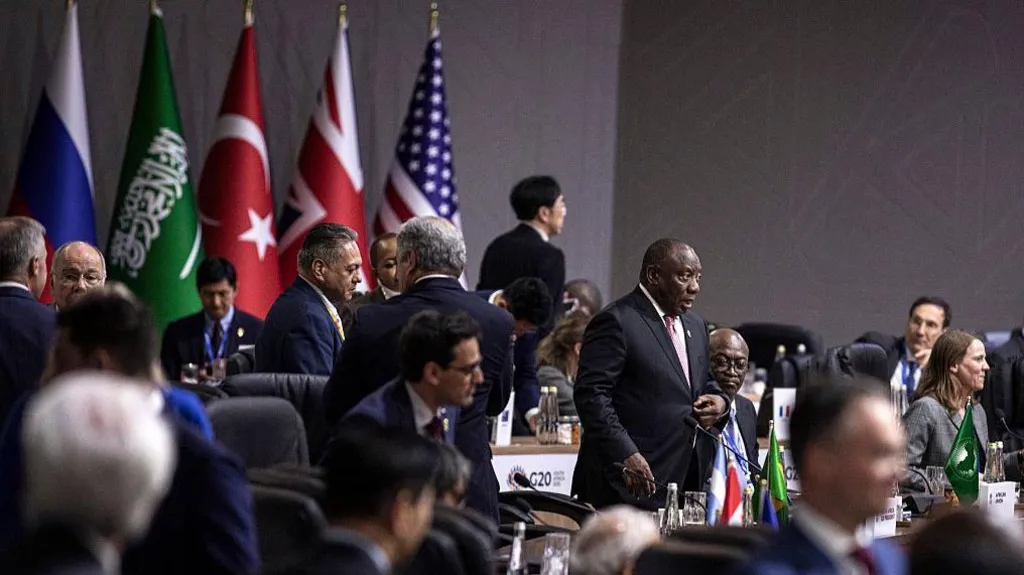
The G20 summit in South Africa, a gathering of the world’s major economies, has ended with a joint declaration committing to “multilateral co-operation”. The declaration, which covered climate change mitigation and economic inequality, was adopted despite objections from the US, which boycotted the meeting in Johannesburg. Speaking at the closing ceremony on Sunday, South African President Cyril Ramaphosa said the agreement showed “shared goals” outweighed the countries’ differences. American President Donald Trump chose to abstain from the G20 because of a widely discredited claim that South Africa’s white minority is the victim of large-scale killings and land grabs. It was the first time a G20 summit was held in Africa. Indonesia, India and Brazil have led the summit over the past three years. The US will host the G20 in 2026, with the summit expected to be held at Trump’s golf course in Florida. The ceremonial handover of the presidency which was meant to happen at the end of the summit on Sunday did not take place. It is expected to take place next week, involving junior officials. Brazilian President Luiz Inácio Lula da Silva said “it didn’t matter much” that Trump had not attended, adding that multilateralism was “more alive than ever”. German Chancellor Fredriech Merz said it had not been a “good decision” for the US to abstain. He told Reuters news agency that what he had noted at the G20 was that “the world is currently undergoing a realignment and that new connections are being formed”. Delegates also reached consensus on working towards “just, comprehensive, and lasting peace” in Ukraine, Sudan, the Democratic Republic of Congo and the “Occupied Palestinian Territory”. The inclusion of Sudan is significant, according to Sudanese commentator and journalist Saeed Abdalla. “I think for the first time, [at] the G20 now they bring the Sudan conflict [to the forefront] after more than two years,” he told local broadcaster Newzroom Afrika. Credit: Danai Nesta Kupembaand Khanyisile Ngcobo,at the G20 summit in Johannesburg. BBC -www.bbc.com G20 summit boycotted by US closes in South Africa
$25B African Megaproject begins – A cross-continental system to move a new form of energy
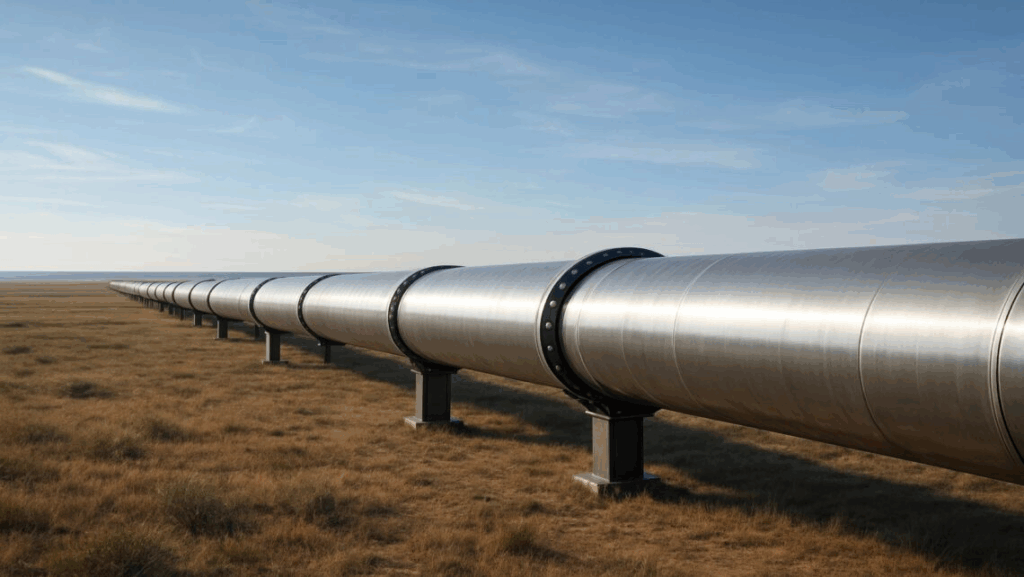
Africa might be in store for a new development in energy that could aid and boost its overall economic potential. A new system that is said to work over continents is entering the planning phase. This system can move energy over large distances and many nations. The world is watching intently as the potential is astronomical. A new form of energy is set to give new life to Africa Large-scale energy flow will be realized with this project and especially for African countries along the Atlantic. A channel way of energy supply is to be created where resources can be transported across borders, with the idea being to supply energy and economic upliftment to areas that have gone without these for years. This energy megaproject could alter things dramatically for the countries involved by providing energy security, which has become a rampant problem in Africa. Funding is being sourced, and this was evident at the recent US-Africa energy forum in Houston, Texas. Leadership from North Africa laid out a plan of transformation as it pertains to energy requirements. How this energy megaproject could work Links between Africa and Europe are at the heart of this energy project. Those involved will need to act decisively before energy trends change and funding becomes more of a strain than it already is. The energy project will involve a gas pipeline between Nigeria and Morocco. The proposed pipeline will be approximately 5,600 to 6,200 kilometers, stretching across 13 African nations along the Atlantic coast. The cost is as jaw-dropping as its potential, with the energy project reported to cost $25 billion. The pipeline itself would transport 30 billion cubic meters of natural gas yearly. It would not only supply the African countries along the Atlantic but also see Morocco become a hub for energy exports to Europe and beyond. The benefits of this energy project and how it might work Backed by the regional bloc Economic Community of West African States (ECOWAS), this energy project is also supported by the Nigerian National Petroleum Company Limited (NNPC) and Morocco’s Office National des Hydrocarbures et des Mines (ONHYM). The proposition is logical as Nigeria has Africa’s largest proven gas reserves, but this has been underused so far. For Morocco, it is the opportunity to be the bridge between Africa and Europe when it comes to energy supply. New supply routes for Nigeria help circumvent geopolitical issues and offer the 13 nations along the Atlantic cleaner energy, in the hopes of getting these nations in line with the global effort to decarbonize. This will come with opportunities for jobs in those 13 nations along this corridor and provide these nations with cleaner energy. The challenges this energy project faces Financing what is to be the longest offshore and overland pipeline ever attempted in Africa will be demanding. That and the differences in regulations in each of the 13 nations involved, while dealing with a myriad of socio-economic issues across kilometers of coastline and hinterland. All these factors are still being very closely looked at before a final investment decision is made. The idea is ambitious, and the vision is slowly moving towards being realized. If things go according to plan, then the Nigeria-Morocco Gas Pipeline could be the fulcrum for Africa’s energy hopes by unifying various states through this energy project and ushering the continent into a future of cleaner energy while also providing economic stimulation in areas that need this. The thinking is exactly what Africa needs so as to catch up to nations that are making advancements every day towards decarbonization and lower emissions. The potential is off the charts, and this will only spark more ideas of this nature across Africa as time progresses. Credit: The Pulse -www.ecoportal.net $25B African megaproject begins — A cross-continental system to move a new form of energy